





OHKF and PolyU Develop Hong Kong's First Chinese Medicine Health Literacy Scale 40% Face Challenges Distinguishing Proprietary Chinese Medicines from Supplements




OHKF and PolyU Develop Hong Kong's First Chinese Medicine Health Literacy Scale 40% Face Challenges Distinguishing Proprietary Chinese Medicines from Supplements

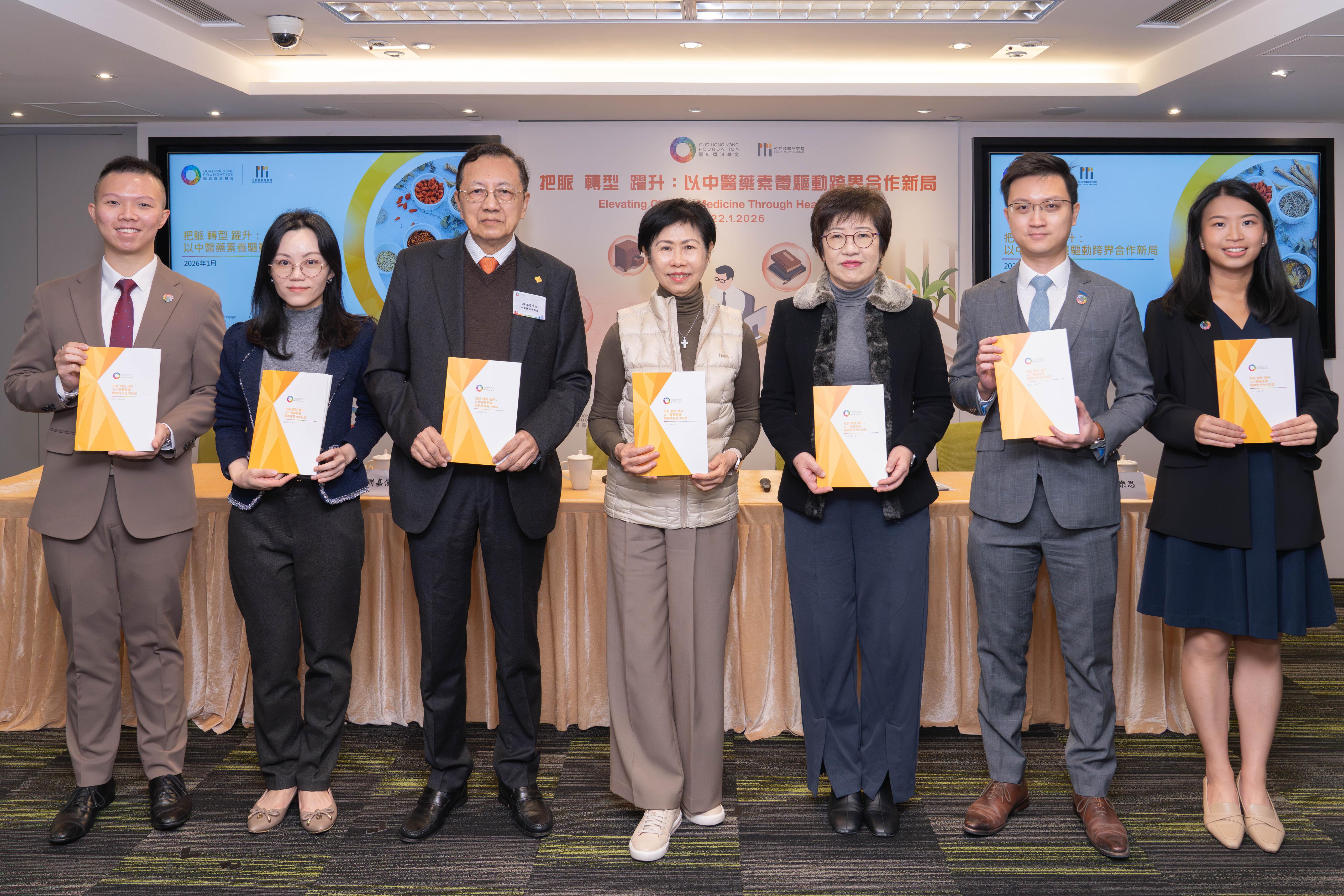
[Hong Kong, January 22, 2026] Following the Government’s recent release of the Chinese Medicine Development Blueprint, which marks a new era for Chinese medicine in Hong Kong, Our Hong Kong Foundation (OHKF) today launches a policy research report, titled Taking the Pulse of Transformation: Elevating Chinese Medicine Through Health Literacy (the Report). The project is funded by the Chinese Medicine Development Fund and developed in collaboration with The Hong Kong Polytechnic University (PolyU), OHKF has successfully developed Hong Kong’s first Chinese Medicine Health Literacy (CMHL) Scale and recommends comprehensive measures to enhance CMHL among the public and healthcare professionals across 4 key areas: policy engagement and evaluation, service delivery, professional training, and public education and promotion.
Hong Kong’s First Localised CMHL Scale
According to the World Health Organization, health literacy represents personal knowledge and competencies regarding health information. Since 2008, the Chinese Mainland has actively promoted health literacy policies, positioning it as a core component of the “Healthy China” strategy. However, there was an absence of CMHL survey tools in Hong Kong. In this regard, OHKF and PolyU have co-developed Hong Kong’s first CMHL Scale.
85% of Respondents Able to Apply CM Health Advice
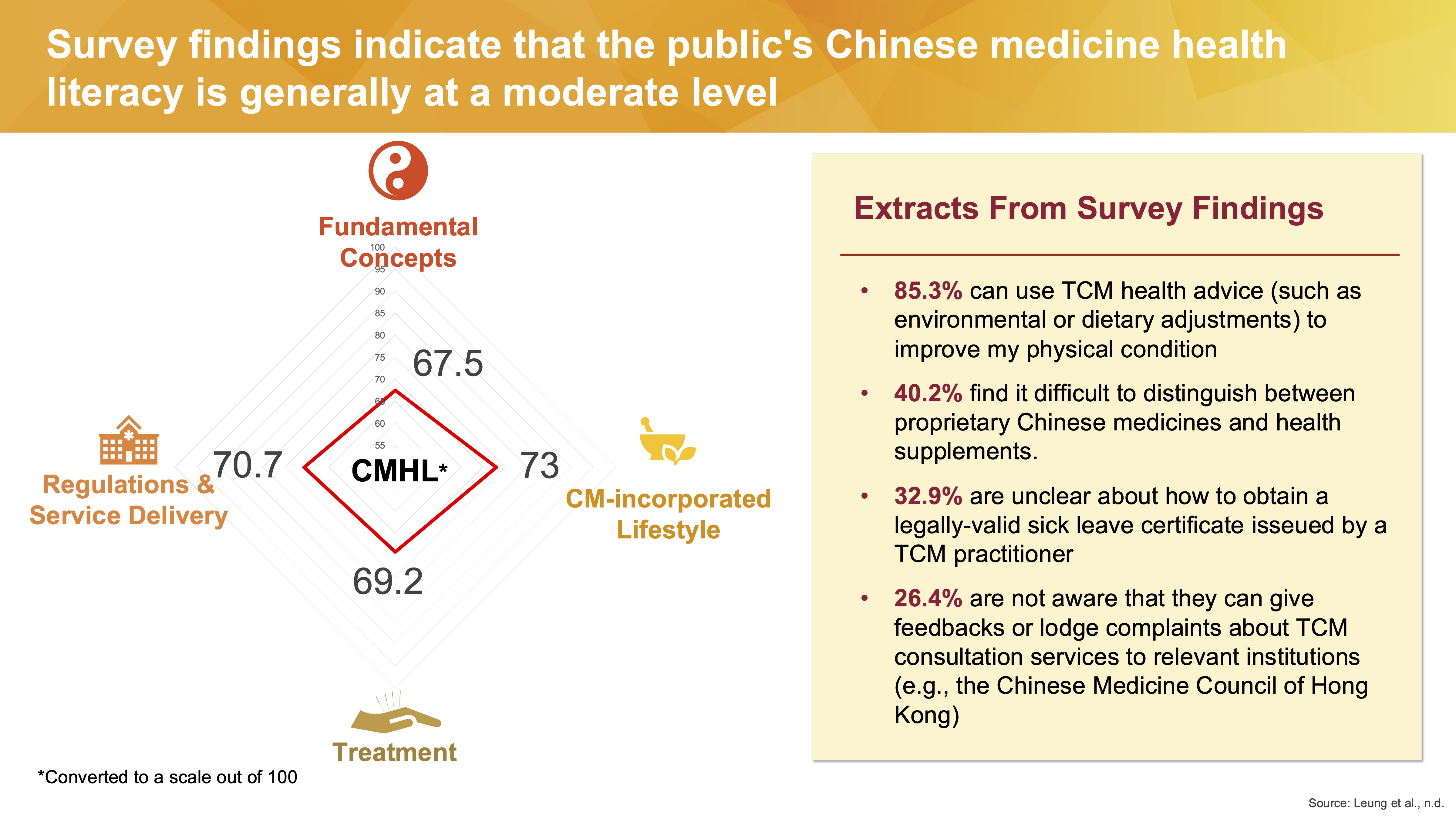
The survey, conducted using the CMHL Scale with 800 citizens, revealed a moderate overall CMHL level of 69.8 out of 100 (see Figure 1). Respondents demonstrated deep understanding of Chinese Medicine (CM)-incorporated lifestyle and service regulations, but showed significant room for improvement in the fundamental concepts and treatment-related knowledge. The research showed that more than 85% of respondents were able to apply CM health advice, such as environmental or dietary adjustments, to improve their physical condition. Meanwhile, 40% found it difficult to distinguish proprietary Chinese medicines from health supplements, about one-third were uncertain about obtaining a legally valid sick leave certificate issued by a CM practitioner, and more than one-quarter were unaware of the option to provide feedback or file complaints regarding CM consultation services.
The Report’s recommendations on 4 aspects for improving CMHL are as follows:
Leveraging CMHL Scale for Targeted Resource Allocation
OHKF recommends the Government draw on the experience of the Chinese mainland by leveraging the CMHL Scale co-developed by OHKF and PolyU, to promptly establish a standardised CMHL assessment system. This tool should also enable regular monitoring mechanisms and serve as a key performance indicator for evaluating the effectiveness of various policies and initiatives. Moreover, stratified data analysis would allow precise identification of groups with low literacy levels and common knowledge gaps, thereby guiding targeted resource allocation and assisting the Government in refining its strategies.
Promoting CM Integration with Mental Health as a Priority
The Report advocates deepening interdisciplinary collaboration between CM practitioners and other healthcare professionals, prioritising areas with clear public health needs and strong potential for interprofessional collaboration. This will enhance public awareness and confidence in CM.
Recognising that the Chinese Medicine Development Blueprint identifies depression as a condition where CM has advantages, and given successful community experience where CM practitioners and other healthcare professionals jointly provide support in mental health services, the Government may prioritise promoting CM involvement in mental health services. Specifically, CM treatments could be provided for patients with mild to moderate conditions under the District Health Centres’ Healthy Mind Pilot Project, complementing existing low-intensity psychotherapy.
Strengthening CMHL Among Healthcare Professionals Through Enhanced Training
The Report notes that 20% to 30% of the public have obtained CM information from healthcare professionals, reflecting the crucial role these professionals play in shaping the public’s accurate understanding of CM. However, the current healthcare professional curricula provide limited coverage of CM, and some professionals remain sceptical about CM practitioners’ ability to utilise modern diagnostic results.
OHKF advises local higher education institutions to incorporate practical CM content into healthcare curricula, covering referral timing, integrated care pathways, and drug-herb interactions, while using case discussions to develop clinical judgment and interprofessional communication skills. Additionally, healthcare students should be arranged for short term clinical attachment programmes at the Chinese Medicine Hospital of Hong Kong and sites with integrated Chinese-Western healthcare services, to enhance their understanding of Chinese medicine clinical processes.
Enhancing Community and School-Based Education to Improve Overall CMHL
At the public education level, OHKF recommends designating the Hong Kong Chinese Medicine Culture Festival as an annual event, redesigned to be “demand-driven” and “experience-oriented”, with the “CMHL Index” as a core evaluation metric for ongoing policy effectiveness monitoring.
In addition to community promotion, OHKF proposes reinforcing collaboration between the CM and the education sectors to ensure children and adolescents acquire accurate knowledge from an early age. Only through complementary campus education and community promotion can all age groups be comprehensively covered, ultimately enhancing the overall CMHL of the public.
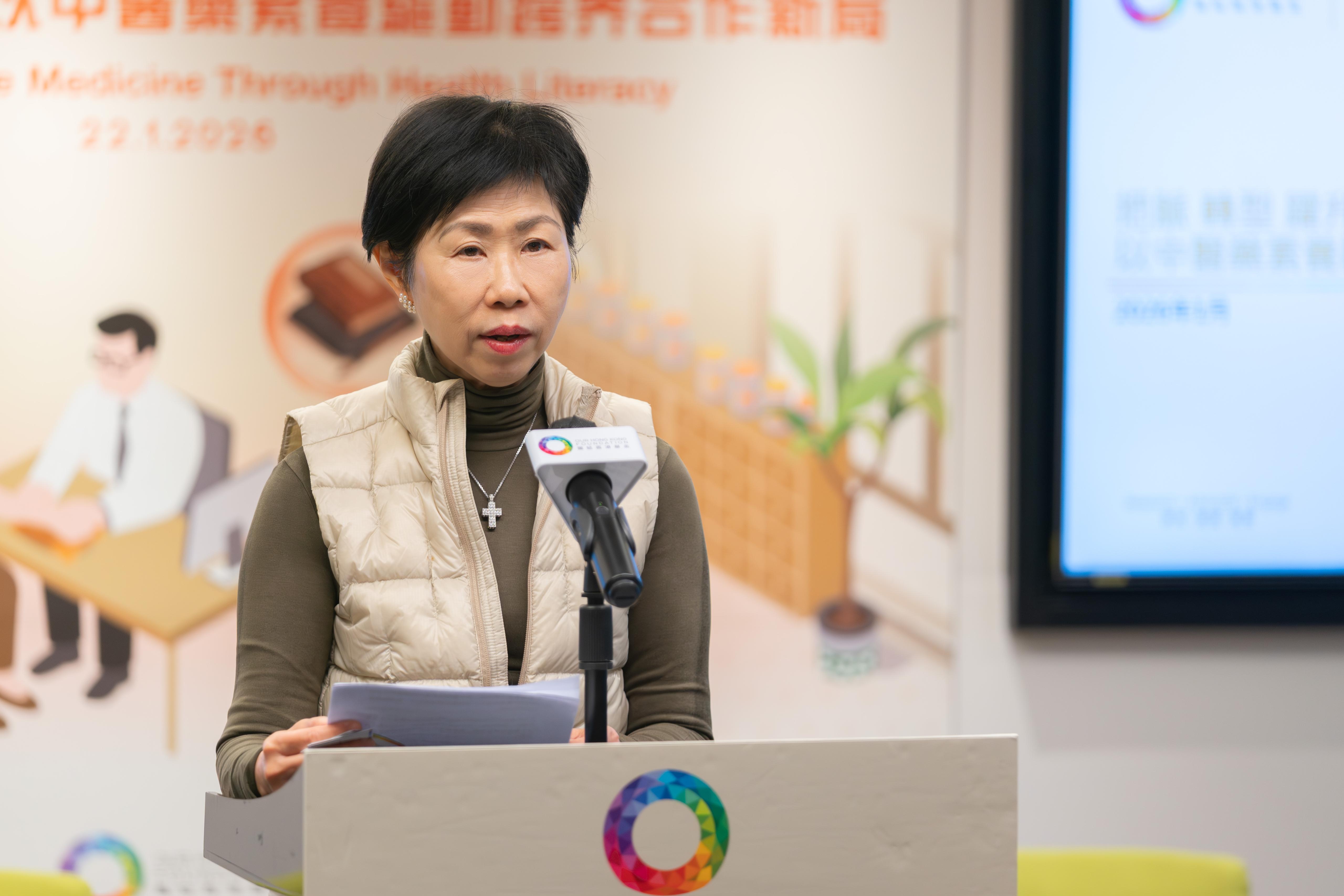
Dr Jane Lee, President of OHKF, commented, “This study has established Hong Kong’s first localised CMHL Scale with encouraging results. Over 85% of the public can apply CM health advice to improve their physical condition, demonstrating a solid foundation for practical application of CM principles in daily life. This reflects that the CM concept of preventive care is gradually taking root among the public. OHKF encourages the Government to leverage the CMHL Scale to establish a regular assessment system and foster a healthier future in collaboration with the public.”
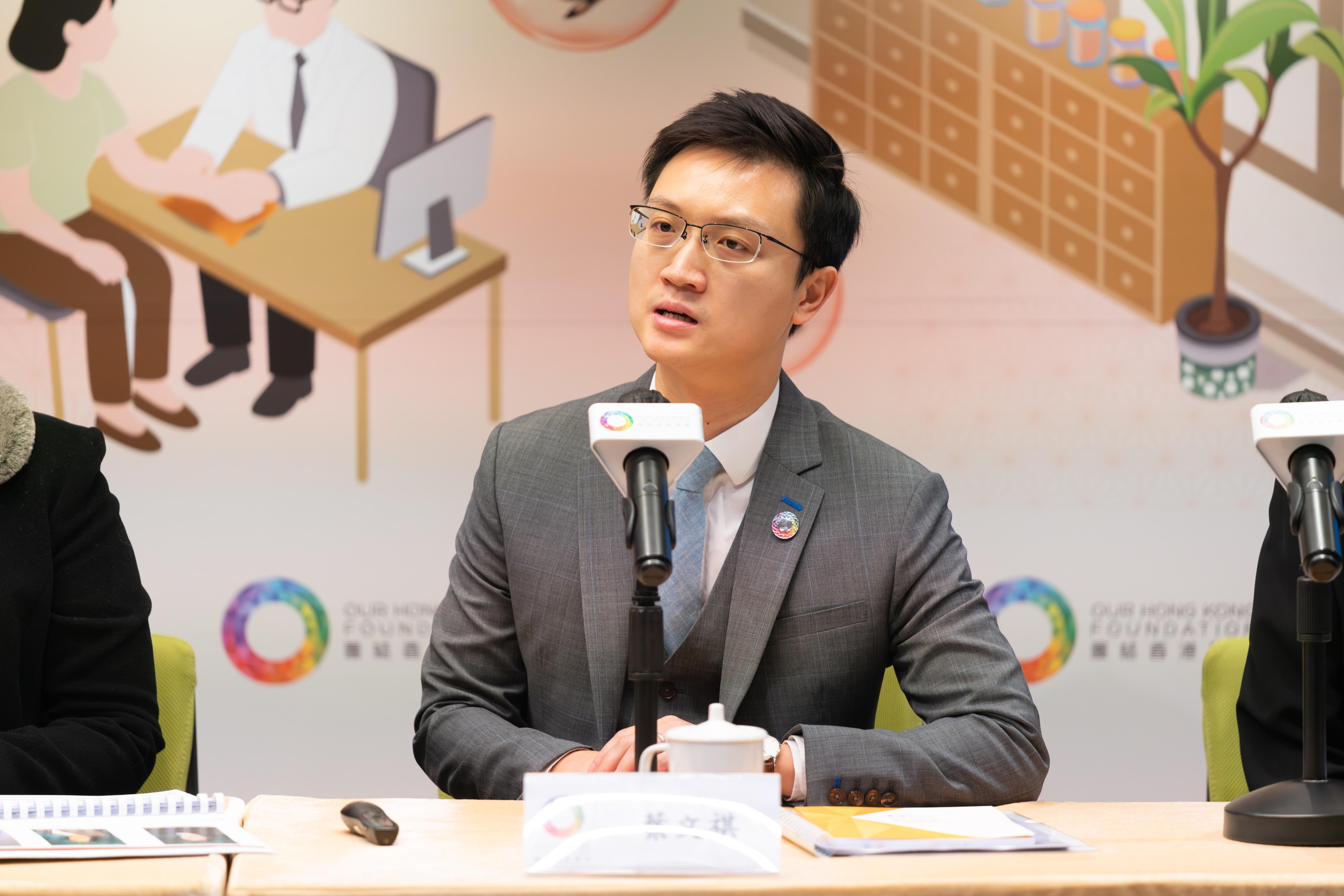
Mr Ryan Ip, Vice President of OHKF and Executive Director of Public Policy Institute, stated, “The study found that about one-third of the public are unclear about how to obtain a legally valid sick leave certificate issued by a CM practitioner, reflecting knowledge gaps in CM services and regulations. This not only affects the rights and interests of the public, but also the application and credibility of CM in daily healthcare. We recommend that the Government strengthen public education and regulatory advocacy based on our research findings, optimise healthcare curricula and foster interprofessional collaboration. This approach will reinforce CM as an indispensable part of Hong Kong’s healthcare system.”
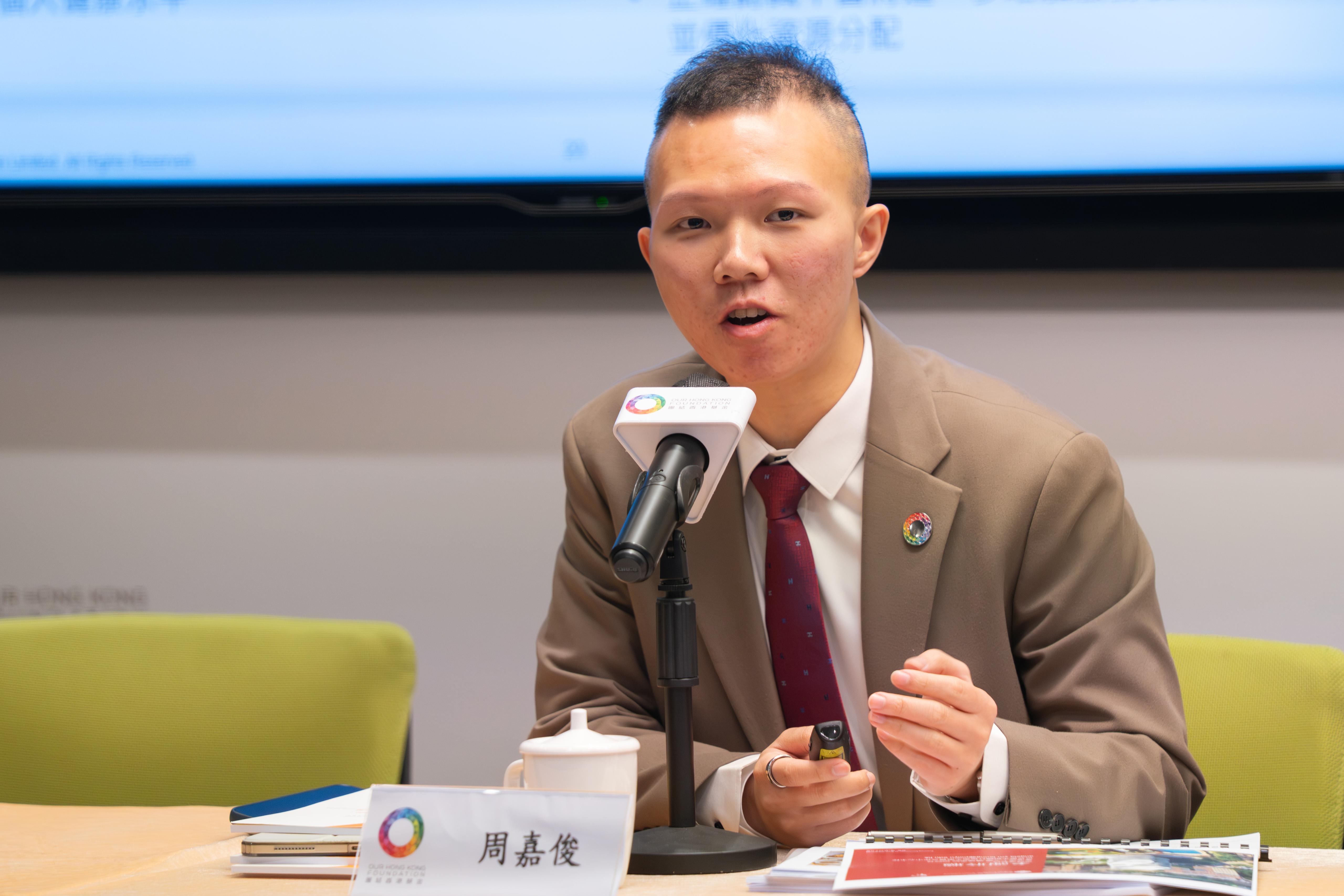
Mr Dicky Chow, Head of Healthcare & Social Innovation of OHKF, highlighted, “Mental health challenges, including depression, have long been one of the major societial concerns. Given that the Chinese Medicine Development Blueprint has identified depression as a condition where CM has advantages, this presents a significant opportunity for interprofessional collaboration. Drawing from local case studies, we advocate integrating CM into existing support services and establishing clinical guidelines to strengthen the service coordination. This will boost public confidence in CM, alleviate healthcare burdens, and set a model for interprofessional collaboration in other fields.”
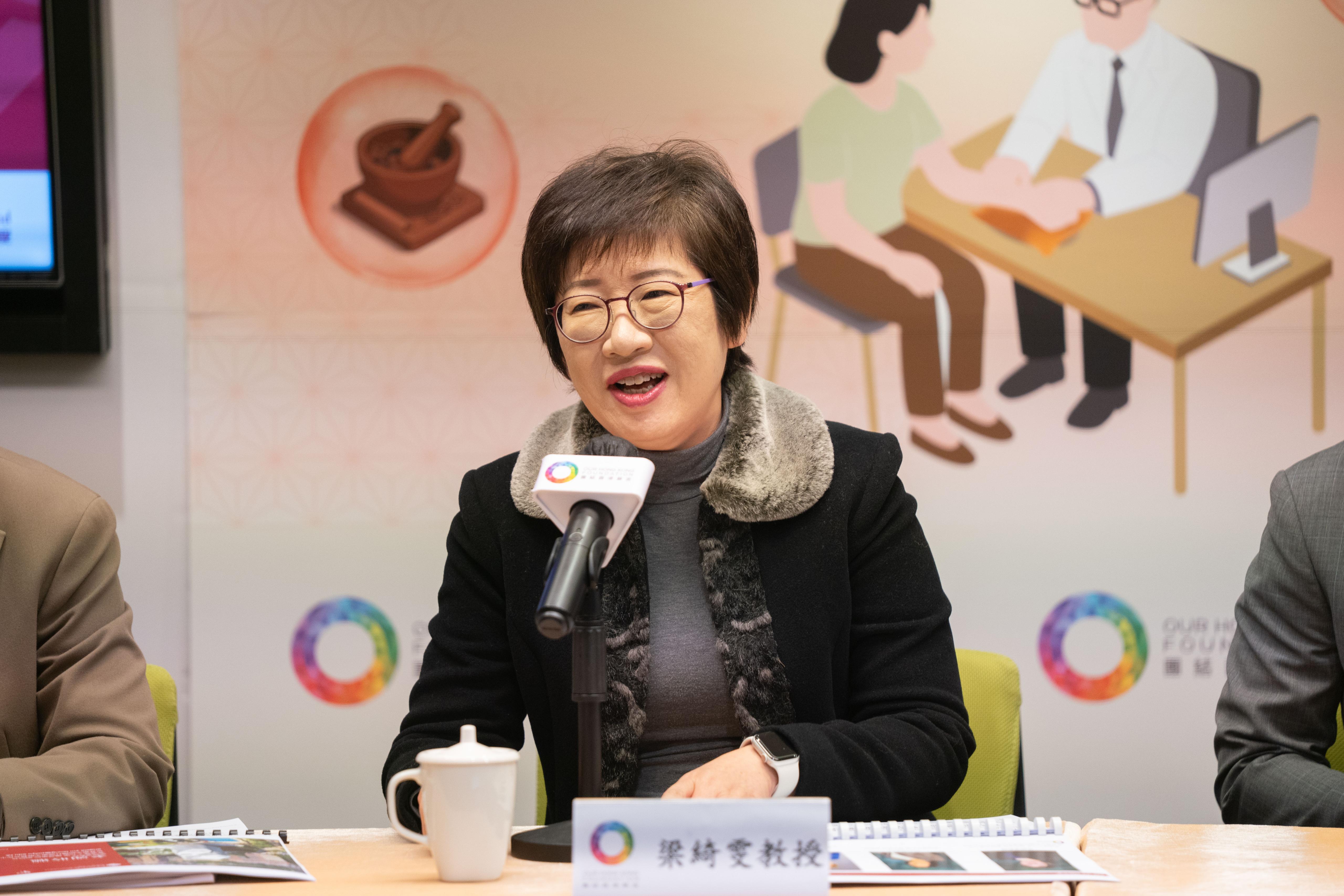
Professor Angela Leung, Professor and Associate Head (Research) of the School of Nursing of PolyU, remarks, “Through six meticulous steps, OHKF and PolyU have jointly developed Hong Kong’s first CMHL Scale, which is scientifically robust and locally applicable. Health literacy is a vital component of the CM development, with various studies highlighting its direct impact on quality of life, healthy behaviours, and chronic disease management. We hope that the Scale will provide an empirical basis for the Government and the academia to jointly promote the CMHL comprehensively and help shape Hong Kong as a healthy and liveable city.”
Any opinions, research, findings, conclusions or recommendations expressed in this material/event (or by the grantee) do not reflect the views or opinions of the Government of the Hong Kong Special Administrative Region, the Health Bureau, the Advisory Committee on Chinese Medicine Development Fund, the Implementation Agent of the Chinese Medicine Development Fund or the Hong Kong Productivity Council.
Taking the Pulse of Transformation: Elevating Chinese Medicine Through Health Literacy
Full Report(Chinese Only): https://bit.ly/49HFDQZ
Presentation Slidest(Chinese Only): https://bit.ly/3LKFKDw
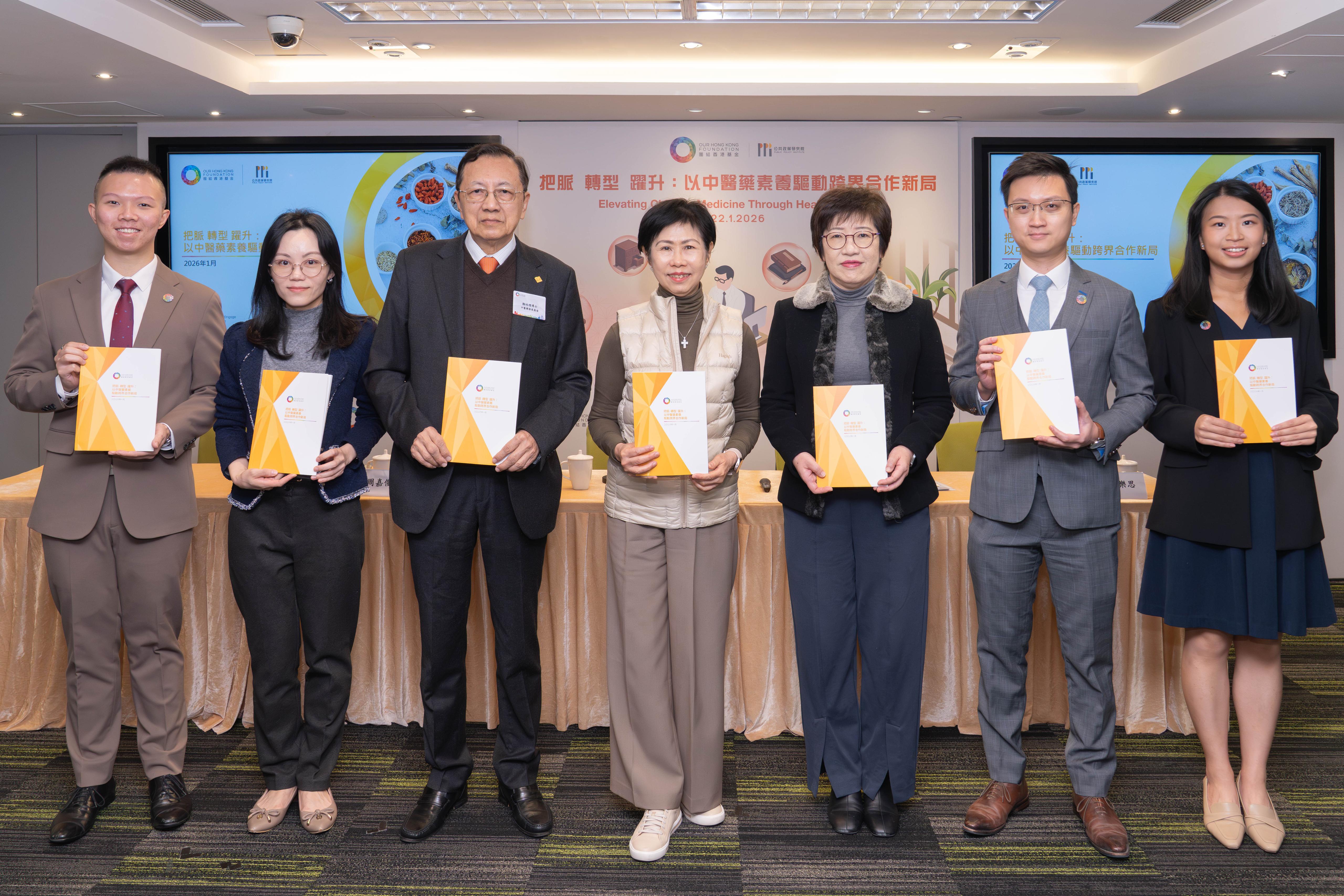


[Hong Kong, January 22, 2026] Following the Government’s recent release of the Chinese Medicine Development Blueprint, which marks a new era for Chinese medicine in Hong Kong, Our Hong Kong Foundation (OHKF) today launches a policy research report, titled Taking the Pulse of Transformation: Elevating Chinese Medicine Through Health Literacy (the Report). The project is funded by the Chinese Medicine Development Fund and developed in collaboration with The Hong Kong Polytechnic University (PolyU), OHKF has successfully developed Hong Kong’s first Chinese Medicine Health Literacy (CMHL) Scale and recommends comprehensive measures to enhance CMHL among the public and healthcare professionals across 4 key areas: policy engagement and evaluation, service delivery, professional training, and public education and promotion.
Hong Kong’s First Localised CMHL Scale
According to the World Health Organization, health literacy represents personal knowledge and competencies regarding health information. Since 2008, the Chinese Mainland has actively promoted health literacy policies, positioning it as a core component of the “Healthy China” strategy. However, there was an absence of CMHL survey tools in Hong Kong. In this regard, OHKF and PolyU have co-developed Hong Kong’s first CMHL Scale.
85% of Respondents Able to Apply CM Health Advice
The survey, conducted using the CMHL Scale with 800 citizens, revealed a moderate overall CMHL level of 69.8 out of 100 (see Figure 1). Respondents demonstrated deep understanding of Chinese Medicine (CM)-incorporated lifestyle and service regulations, but showed significant room for improvement in the fundamental concepts and treatment-related knowledge. The research showed that more than 85% of respondents were able to apply CM health advice, such as environmental or dietary adjustments, to improve their physical condition. Meanwhile, 40% found it difficult to distinguish proprietary Chinese medicines from health supplements, about one-third were uncertain about obtaining a legally valid sick leave certificate issued by a CM practitioner, and more than one-quarter were unaware of the option to provide feedback or file complaints regarding CM consultation services.
The Report’s recommendations on 4 aspects for improving CMHL are as follows:
Leveraging CMHL Scale for Targeted Resource Allocation
OHKF recommends the Government draw on the experience of the Chinese mainland by leveraging the CMHL Scale co-developed by OHKF and PolyU, to promptly establish a standardised CMHL assessment system. This tool should also enable regular monitoring mechanisms and serve as a key performance indicator for evaluating the effectiveness of various policies and initiatives. Moreover, stratified data analysis would allow precise identification of groups with low literacy levels and common knowledge gaps, thereby guiding targeted resource allocation and assisting the Government in refining its strategies.
Promoting CM Integration with Mental Health as a Priority
The Report advocates deepening interdisciplinary collaboration between CM practitioners and other healthcare professionals, prioritising areas with clear public health needs and strong potential for interprofessional collaboration. This will enhance public awareness and confidence in CM.
Recognising that the Chinese Medicine Development Blueprint identifies depression as a condition where CM has advantages, and given successful community experience where CM practitioners and other healthcare professionals jointly provide support in mental health services, the Government may prioritise promoting CM involvement in mental health services. Specifically, CM treatments could be provided for patients with mild to moderate conditions under the District Health Centres’ Healthy Mind Pilot Project, complementing existing low-intensity psychotherapy.
Strengthening CMHL Among Healthcare Professionals Through Enhanced Training
The Report notes that 20% to 30% of the public have obtained CM information from healthcare professionals, reflecting the crucial role these professionals play in shaping the public’s accurate understanding of CM. However, the current healthcare professional curricula provide limited coverage of CM, and some professionals remain sceptical about CM practitioners’ ability to utilise modern diagnostic results.
OHKF advises local higher education institutions to incorporate practical CM content into healthcare curricula, covering referral timing, integrated care pathways, and drug-herb interactions, while using case discussions to develop clinical judgment and interprofessional communication skills. Additionally, healthcare students should be arranged for short term clinical attachment programmes at the Chinese Medicine Hospital of Hong Kong and sites with integrated Chinese-Western healthcare services, to enhance their understanding of Chinese medicine clinical processes.
Enhancing Community and School-Based Education to Improve Overall CMHL
At the public education level, OHKF recommends designating the Hong Kong Chinese Medicine Culture Festival as an annual event, redesigned to be “demand-driven” and “experience-oriented”, with the “CMHL Index” as a core evaluation metric for ongoing policy effectiveness monitoring.
In addition to community promotion, OHKF proposes reinforcing collaboration between the CM and the education sectors to ensure children and adolescents acquire accurate knowledge from an early age. Only through complementary campus education and community promotion can all age groups be comprehensively covered, ultimately enhancing the overall CMHL of the public.
Dr Jane Lee, President of OHKF, commented, “This study has established Hong Kong’s first localised CMHL Scale with encouraging results. Over 85% of the public can apply CM health advice to improve their physical condition, demonstrating a solid foundation for practical application of CM principles in daily life. This reflects that the CM concept of preventive care is gradually taking root among the public. OHKF encourages the Government to leverage the CMHL Scale to establish a regular assessment system and foster a healthier future in collaboration with the public.”
Mr Ryan Ip, Vice President of OHKF and Executive Director of Public Policy Institute, stated, “The study found that about one-third of the public are unclear about how to obtain a legally valid sick leave certificate issued by a CM practitioner, reflecting knowledge gaps in CM services and regulations. This not only affects the rights and interests of the public, but also the application and credibility of CM in daily healthcare. We recommend that the Government strengthen public education and regulatory advocacy based on our research findings, optimise healthcare curricula and foster interprofessional collaboration. This approach will reinforce CM as an indispensable part of Hong Kong’s healthcare system.”
Mr Dicky Chow, Head of Healthcare & Social Innovation of OHKF, highlighted, “Mental health challenges, including depression, have long been one of the major societial concerns. Given that the Chinese Medicine Development Blueprint has identified depression as a condition where CM has advantages, this presents a significant opportunity for interprofessional collaboration. Drawing from local case studies, we advocate integrating CM into existing support services and establishing clinical guidelines to strengthen the service coordination. This will boost public confidence in CM, alleviate healthcare burdens, and set a model for interprofessional collaboration in other fields.”
Professor Angela Leung, Professor and Associate Head (Research) of the School of Nursing of PolyU, remarks, “Through six meticulous steps, OHKF and PolyU have jointly developed Hong Kong’s first CMHL Scale, which is scientifically robust and locally applicable. Health literacy is a vital component of the CM development, with various studies highlighting its direct impact on quality of life, healthy behaviours, and chronic disease management. We hope that the Scale will provide an empirical basis for the Government and the academia to jointly promote the CMHL comprehensively and help shape Hong Kong as a healthy and liveable city.”
Any opinions, research, findings, conclusions or recommendations expressed in this material/event (or by the grantee) do not reflect the views or opinions of the Government of the Hong Kong Special Administrative Region, the Health Bureau, the Advisory Committee on Chinese Medicine Development Fund, the Implementation Agent of the Chinese Medicine Development Fund or the Hong Kong Productivity Council.
Taking the Pulse of Transformation: Elevating Chinese Medicine Through Health Literacy
Full Report(Chinese Only): https://bit.ly/49HFDQZ
Presentation Slidest(Chinese Only): https://bit.ly/3LKFKDw